

How Do Invisalign Aligners Help Achieve a Straighter Smile?
By Dr. Alireza Moshaverinia Curriculum vitae Published Updated
Aligners Versus Braces
Fundamentally, both systems rely on the same biological process called bone remodeling: applying continuous pressure to a tooth causes the bone on one side to break down while new bone forms on the other side, securing the tooth in its new position. However, the mechanism of force application is completely different.
Braces Pull
Traditional braces pull teeth into alignment using tension from a metal archwire anchored by brackets.
Aligners Push
Invisalign aligners, conversely, push teeth into place using a series of custom-molded plastic trays that completely enclose the crown of each tooth, distributing force more evenly.
How Often Aligners Change
To ensure steady, safe progress, you will typically change your Invisalign aligners every 1 to 2 weeks, depending on your custom treatment blueprint.
- 01
A Fraction of a Millimeter
Each individual set of trays is engineered to move specific teeth by a fraction of a millimeter (usually about 0.25 mm per tray).
- 02
Visible Progress
Swapping out your aligners on schedule ensures that the continuous, gentle pressure is maintained, allowing you to see visible improvements in your smile’s alignment every few weeks.
More Severe Misalignments
While clear aligners were originally designed for mild cosmetic adjustments, massive leaps in orthodontic technology have made them highly effective against severe dental misalignments. By pairing the aligners with discreet, tooth-colored composite “attachments” bonded to your teeth, the trays can achieve complex movements like rotating stubborn premolars or intruding and extruding teeth.
This allows Invisalign to successfully correct moderate-to-severe crowding, large gaps, and complex bite issues like overbites, underbites, and crossbites.
Custom-Made for Your Teeth
Invisalign aligners achieve optimal results because they are 100% customized to your unique oral anatomy.
-
An Intraoral Scan
Using a high-tech intraoral scanner, your provider captures a highly precise 3D digital rendering of your teeth and gum line.
-
Mapped Movement
Specialized software then maps out the exact trajectory of your tooth movement.
-
SmartTrack® Material
The aligners are then laser-cut from proprietary SmartTrack® material—a medical-grade thermoplastic designed to perfectly contour to your teeth and apply highly targeted, comfortable, and predictable force.
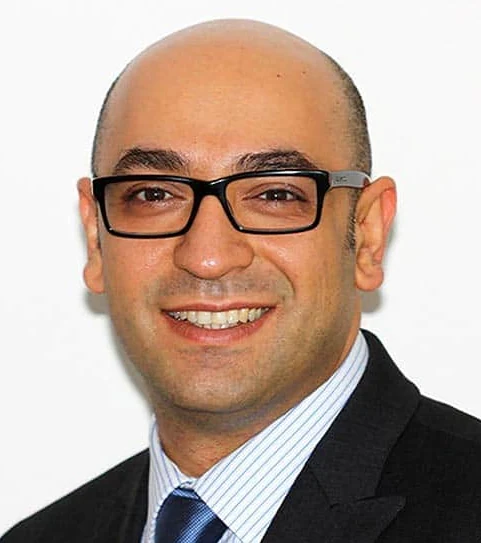
Meet Dr. Alireza Moshaverinia
Dr. Alireza Moshaverinia combines his advanced training as a board-certified prosthodontist and scientist to design highly sophisticated, individualized clear aligner pathways.
Read his full biography: Dr. Alireza Moshaverinia →Medical disclaimer. This content is for informational purposes only and does not constitute dental or medical advice, diagnosis, or treatment. Always consult with a qualified dental professional regarding any questions about your oral health. Individual results may vary.