What Is the Difference Between a Dental Onlay and a Dental Inlay?
Dental inlays and onlays are conservative restorative treatments used to repair moderate tooth decay, with inlays fitting precisely within the tooth’s center and onlays extending to cover one or more of the chewing cusps. Both options preserve significantly more of your natural tooth structure than a full traditional crown while offering exceptional durability and a seamless, lifelike aesthetic. To determine which specific restoration will best protect your oral health, it is essential to consult with Dr. Alireza Moshaverinia, D.D.S., M.S., Ph.D., F.A.C.P., who can thoroughly evaluate the damage and recommend the most effective, customized solution. For more information, contact us or request an appointment online. We are conveniently located at 5363 Balboa Blvd, #434 Encino, CA 91316.
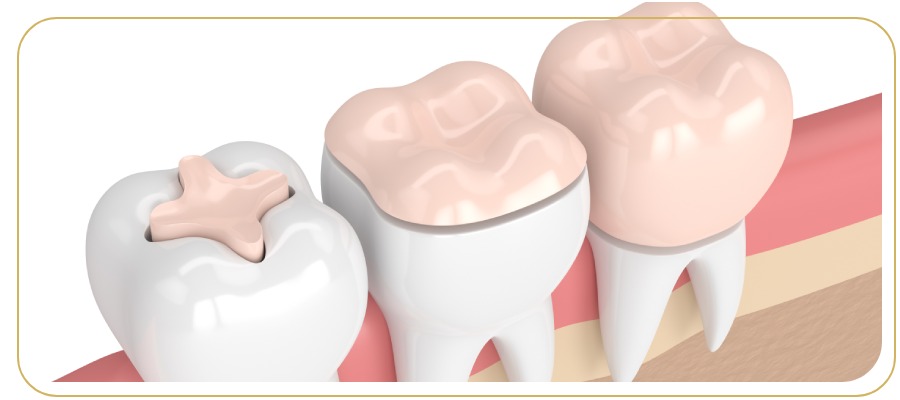
Table of Contents:
What is the exact physical difference in how an inlay and an onlay fit on the tooth?
How does the extent of my tooth decay determine whether I need an inlay or an onlay?
Why would my dentist recommend an inlay or onlay instead of a standard filling or full crown?
Are the procedures for getting a dental inlay and an onlay the same?
Do inlays and onlays have the same lifespan, and how should I care for them?
How Dental Onlays and Inlays Differ: A Guide by Dr. Alireza Moshaverinia, D.D.S., M.S., Ph.D., F.A.C.P.
Inlays are ideal when decay or damage is limited to the grooves of your tooth, and the surrounding cusps (the raised parts of your tooth’s chewing surface) are still strong and healthy. The inlay is crafted to fit precisely within the boundaries of these cusps, restoring strength and function while preserving as much of your natural tooth structure as possible.
Onlays, sometimes referred to as “partial crowns,” are used when the damage is more extensive and affects one or more of the tooth’s cusps. Unlike inlays, onlays extend over the cusps and cover a larger portion of your tooth. This provides greater reinforcement, especially when the tooth’s chewing surface needs added protection and support.
At Encino Advanced Dentistry, Dr. Moshaverinia uses advanced materials and techniques to ensure your inlay or onlay blends seamlessly with your natural teeth. Whether you need to repair an old filling or restore a damaged tooth, our team will help you choose the best solution for your oral health and aesthetic goals.
When it comes to restoring damaged teeth, the choice between a dental inlay and an onlay depends on the extent and location of the decay.
If the decay is limited to the central chewing surface of your tooth and does not affect the pointed cusps, our dentists may recommend a dental inlay. Inlays are custom-made restorations that fit precisely within the grooves of your tooth, repairing the damaged area while preserving as much of your natural tooth as possible.
However, if the decay has reached one or more of the tooth’s cusps—the raised points on the chewing surface—an onlay may be the best solution. Onlays cover a larger area, including at least one cusp, and sometimes extend over the edge of the tooth. This provides additional strength and protection, especially when the damage is too extensive for an inlay but not severe enough to require a full dental crown.
At Encino Advanced Dentistry, your dentist will thoroughly evaluate your tooth using a clinical exam and advanced digital X-rays. This allows us to recommend the restoration—whether inlay or onlay—that will best restore your tooth’s function, durability, and natural appearance, while preserving as much healthy tooth structure as possible.
Inlays and onlays are custom-made restorations, crafted from high-quality materials such as porcelain, composite resin, or gold. They are designed to fit your tooth precisely, restoring its strength, function, and natural appearance.
Inlays are used when the damage is within the cusps (the raised edges) on the tooth’s chewing surface.
Onlays are chosen when the damage extends to one or more cusps, but the full coverage of a crown isn’t necessary.
Compared to a traditional filling, inlays and onlays provide greater durability and support, especially if the area being restored is too large for a filling to withstand normal biting forces. Unlike a crown—which requires removing more of your healthy tooth—these restorations conserve more of your natural tooth structure, making them a minimally invasive option.
Dental inlays and onlays are precise, durable solutions for restoring teeth with moderate decay or damage. These advanced restorations are ideal when a traditional filling isn’t sufficient but a full dental crown isn’t necessary.
Our Inlay and Onlay Procedure
The process begins with your comfort in mind. Our provider will gently numb the area and carefully remove the decayed or damaged portion of your tooth. The tooth is then thoroughly cleaned and shaped to ensure an exact fit for your custom restoration.
Next, we’ll take a detailed impression of the prepared tooth. This impression is sent to our trusted dental laboratory, where your inlay or onlay is expertly crafted from high-quality materials such as porcelain, composite resin, or gold, depending on your needs and preferences. While your permanent restoration is being made, we’ll place a temporary covering to protect your tooth.
Inlays vs. Onlays: What’s the Difference?
• Inlays fit neatly within the grooves of your tooth and do not extend over the cusps (the pointed parts of the tooth).
• Onlays are designed to cover one or more of the tooth’s cusps, providing additional strength and protection when the damage is more extensive.
Once your custom inlay or onlay is ready, you’ll return to Encino Advanced Dentistry for placement. Dr. Moshaverinia will remove the temporary material, check the fit and appearance, and securely bond the new restoration to your tooth using a strong dental adhesive. We’ll make any final adjustments to ensure your bite feels natural and comfortable.
Inlays and onlays are similar in purpose, and both can last anywhere from 10 to 15 years—or even longer—with proper care.
The longevity of your inlay or onlay depends on several factors, including the material chosen—such as porcelain, composite resin, or gold—as well as the location of the restoration, your oral hygiene habits, and lifestyle factors like teeth grinding or clenching. Our experienced team will help you select the most appropriate material for your unique needs.
Caring for your inlays and onlays at home is straightforward and similar to caring for your natural teeth. We recommend brushing at least twice a day with fluoride toothpaste and flossing daily to keep your teeth and restorations free of plaque and food particles. Regular dental check-ups and professional cleanings at our Encino office are essential so our dentists can monitor the health of your restorations and address any issues early on.
At Encino Advanced Dentistry, Dr. Alireza Moshaverinia, D.D.S., M.S., Ph.D., F.A.C.P., offers expert guidance on choosing between dental onlays and inlays, helping patients restore their teeth with the most appropriate solution. Both options are effective for treating tooth decay and damage while maintaining the tooth’s structure, but they differ in the extent of coverage.
Dental Inlays
Inlays are perfect for smaller cavities located between the cusps of the tooth. Crafted to fit precisely into the decayed portion, inlays are custom-made from durable materials like porcelain or composite resin. This option is ideal for areas that require restoration but do not need full coverage.
Dental Onlays
Onlays are used for larger cavities that affect the tooth’s structure more extensively, often involving one or more cusps. Onlays cover a broader surface area than inlays and provide additional support to the tooth. They are also custom-made to match the natural color of your teeth, ensuring a seamless look.
Dr. Moshaverinia ensures that whether you need an onlay or an inlay, each restoration is designed to offer lasting strength and a natural appearance, all while preserving as much of your natural tooth as possible. For more information, contact us or request an appointment online. We are conveniently located at 5363 Balboa Blvd, #434 Encino, CA 91316. We serve patients from Encino CA, Tarzana CA, Van Nuys CA, Sherman Oaks CA, Calabasas CA, and surrounding areas.
Check Out Our 5 Star Reviews


Additional Services You May Need
▸ Comprehensive Dental Cleaning
▸ Cleanings
▸ Preventive Care
▸ Fluoride Treatments
▸ Dental Sealants
▸ Night Guards
▸ Sports Guards
▸ Digital X-rays
▸ Oral Cancer Screening
▸ Dental Checkups
▸ Sealing Out Tooth Decay
▸ Cosmetic Dentistry
▸ Smile Design
▸ Digital Smile Preview
▸ Porcelain Veneers
▸ Teeth Whitening
▸ Cosmetic Reshaping
▸ Full Smile Makeover
▸ Invisalign®
▸ Restorations
▸ Complete Dentures
▸ Crowns
▸ Bridges
▸ Full-Mouth Reconstruction
▸ Cavities
▸ Cracked Tooth
▸ Prosthodontics
▸ Dental Implants
▸ Periodontal Disease
▸ Non-Surgical Periodontal Therapy
▸ Bone Grafting
▸ Gum Grafting
▸ Pocket Reduction Surgery
▸ Gum Recession
▸ Periodontics
▸ Pediatric Dentistry
▸ Extractions
▸ Wisdom Tooth Removal
▸ Restorative Dentistry
▸ Porcelain Inlays
▸ Porcelain Onlays
▸ More Services
Additional Services You May Need
▸ Comprehensive Dental Cleaning
▸ Cleanings
▸ Preventive Care
▸ Fluoride Treatments
▸ Dental Sealants
▸ Night Guards
▸ Sports Guards
▸ Digital X-rays
▸ Oral Cancer Screening
▸ Dental Checkups
▸ Sealing Out Tooth Decay
▸ Cosmetic Dentistry
▸ Smile Design
▸ Digital Smile Preview
▸ Porcelain Veneers
▸ Teeth Whitening
▸ Cosmetic Reshaping
▸ Full Smile Makeover
▸ Invisalign®
▸ Restorations
▸ Complete Dentures
▸ Crowns
▸ Bridges
▸ Full-Mouth Reconstruction
▸ Cavities
▸ Cracked Tooth
▸ Prosthodontics
▸ Dental Implants
▸ Periodontal Disease
▸ Non-Surgical Periodontal Therapy
▸ Bone Grafting
▸ Gum Grafting
▸ Pocket Reduction Surgery
▸ Gum Recession
▸ Periodontics
▸ Pediatric Dentistry
▸ Extractions
▸ Wisdom Tooth Removal
▸ Restorative Dentistry
▸ Porcelain Inlays
▸ Porcelain Onlays
▸ More Services