FAQs about Prosthodontics
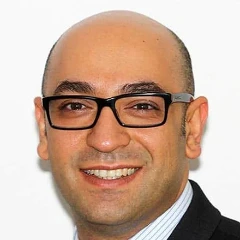
At Encino Advanced Dentistry, Dr. Alireza Moshaverinia utilizes his advanced training to handle complex dental cases that go beyond the scope of general dentistry.
The specialty
What does a prosthodontist do?
A prosthodontist is essentially the "architect" of a dental treatment plan. After completing four years of dental school, they undergo three additional years of intensive, university-based geriatric and restorative residency. They specialize in the design, manufacture, and fitting of artificial replacements for teeth and other parts of the mouth. This includes everything from crowns and bridges to complex dental implants and highly lifelike dentures.
Can prosthodontic treatments be used to fix bite problems?
Absolutely. This is a primary focus of the specialty. An improper "occlusion" (how your teeth meet) can cause headaches, cracked teeth, and uneven wear. A prosthodontist can perform a "full-mouth rehabilitation," using crowns or onlays to realign the jaw and ensure that pressure is distributed evenly across all teeth.
Can a prosthodontist help with jaw issues or temporomandibular joint (TMJ) pain?
Yes. Because prosthodontists are experts in the relationship between the teeth, the jaw muscles, and the joints, they are uniquely qualified to treat TMJ disorders. Often, TMJ pain is caused by missing teeth or a misaligned bite. By restoring the correct height and position of the teeth, a prosthodontist can relieve the strain on the jaw joint and eliminate chronic pain.
Planning treatment
How do I know if I need a dental prosthetic?
If you are missing one or more teeth, have severely cracked or worn teeth, or struggle with a "collapsed" bite that makes chewing painful, you likely need a prosthetic. Common signs include:
- Difficulty speaking clearly.
- Shifts in your remaining teeth.
- Changes in your facial structure (sunken cheeks).
- Persistent jaw pain.
How do I know if I need a full set of dentures or partial dentures?
The decision is based on the health of your remaining teeth.
- Partial Dentures: Used when you still have several healthy, strong teeth that can act as "anchors" for the prosthetic.
- Full Dentures: Necessary when all teeth in an arch are missing or are so diseased that they require extraction.
- The "Middle Ground": Many patients now opt for "implant-supported overdentures," which use a few implants to "snap" a full denture into place for better stability.
Are dental implants better than dentures?
"Better" often depends on the patient's specific health, bone structure, and budget. However, from a functional standpoint, implants offer several advantages:
- Bone Preservation: Implants stimulate the jawbone, preventing the facial collapse that often occurs with long-term denture use.
- Stability: Implants don't slip or click, allowing you to eat tough or crunchy foods.
- Convenience: You don't have to remove implants at night or use messy adhesives.
Dentures remain a valid, cost-effective option for those who may not be candidates for surgery.
Is prosthodontic treatment covered by insurance?
Coverage varies significantly between providers. Most dental insurance plans cover a portion of "restorative" procedures like crowns or bridges. More complex treatments, such as dental implants, were traditionally considered cosmetic but are increasingly being covered as "major" procedures. At Encino Advanced Dentistry, we recommend a pre-treatment estimate to determine what your plan will contribute.
Recovery and care
What is the recovery time for dental implants?
Recovery happens in phases. The initial "soft tissue" healing takes about 7 to 14 days, during which you may experience minor swelling. However, the critical "bone healing" phase (osseointegration) takes 3 to 6 months. During this time, the bone grows around the implant. While you wait for this biological process, you are usually fitted with a temporary prosthetic so you never have to go without teeth.
How long do dental implants last?
When properly maintained, the titanium or zirconia post of a dental implant is designed to be a permanent, lifelong solution. While the "crown" (the visible tooth part) may experience normal wear and tear over 10 to 15 years and require replacement, the implant itself fuses with your jawbone through a process called osseointegration. Factors that influence longevity include your oral hygiene habits, bone density, and whether or not you smoke.
How do I care for my prosthetic teeth?
Caring for prosthetics is similar to caring for natural teeth, but with a few nuances.
- Fixed Prosthetics (Crowns/Implants): Brush twice a day and use "super floss" or a water flosser to clean under bridges and around implant abutments.
- Removable Prosthetics (Dentures): Clean them daily with a non-abrasive denture cleaner and soak them overnight to keep the material hydrated.
Regular visits to a prosthodontist are essential to check for "micro-movements" or wear on the hardware.
Are there any risks associated with prosthodontic treatments?
As with any medical procedure, there are minor risks, including infection at the site, minor nerve damage, or sinus issues (for upper jaw implants). However, in the hands of a specialist like Dr. Alireza Moshaverinia, success rates for procedures like dental implants are exceptionally high—typically over 95 to 98%.